Myth is Supernatural
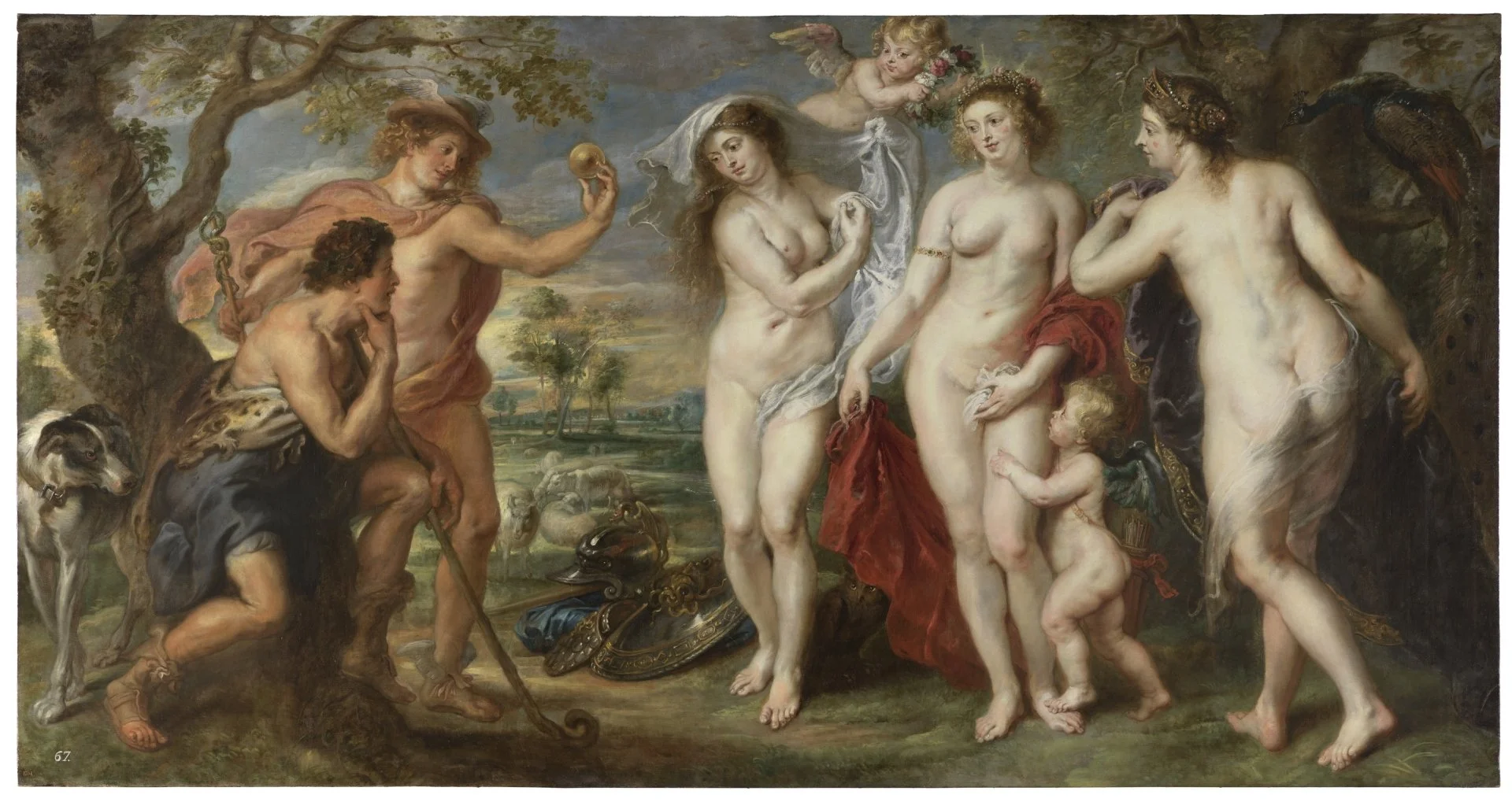
The Judgment of Paris / Rubens / 1638
When we think of the "forces of nature," we think of gravity, thermodynamics, or the cold precision of the weather. We see these as the boundaries of reality. Myths, by contrast, are usually dismissed as mere human inventions—subjective tales existing "outside" the mechanical laws of the universe.
But this is where we err. If we look at the human condition, we see that we are not governed by biology or physics alone. We are ruled by a force that is fundamentally supernatural: the power of the Story. Whether they manifest as grand narratives, ancient myths, or scientific ideologies, these stories exert a metaphysical pressure on our world that no physical law can replicate. They are the invisible hands that shape our faith, our morality, and our very logic.
The War of the Invisible
Many of the global conflicts we witness today are not merely struggles over land or resources; they are conflicting myths—supernatural currents—waging war against one another. From this perspective, humans are not the masters of their destiny, but the pawns of larger ideational spirits that exist above the natural realm.
It might sound as if I am observing this from a detached, objective distance—a silent observer of a chaotic game. But that is not the case. I do not subscribe to relativism. I am acutely aware of my perspective, yet I take a subjective stance based on the perceived truth of my own stories. My stories are not mere fables; they are anchored in facts, a moral value system, and a logical framework.
However, I hold no delusions about my ability to convince everyone. My logic often holds no value for others—not because of the quality of my thinking, but because of the nature of thinking itself. What truly determines a person’s conviction is a compelling story.
Why Logic Fails (and Stories Succeed)
A story must touch you to change you. But a good story touches different people in different places. Some are drawn to the moral lesson; others are swept up in the action; some prioritize the overarching ideas, while a few seek logical coherence.
We often miss these typological differences, locking horns like rams in a field. You cannot convince someone with logic if logic is not a currency they value. You cannot appeal to a moral value if their system of thought is designed to dismiss it. Facts are powerful, but when a fact contradicts a cherished idea, many will choose the idea and discard the reality. Conversely, some get so lost in the "minute details" of facts that they become blind to the overarching truth being told.
The Jungian Spell
According to Carl Jung, the human psyche tends to favor one of four mental functions: Sensation, Intuition, Thinking, or Feeling. The functions we neglect fall under the spell of the irrational. These are the aspects of life we accept without question—either because we’ve never thought to ask, or because we are comfortably satisfied with the status quo.
Only the truly "individuated" person cares enough to integrate all four functions. Most people are content to dismiss large swaths of their own minds as inconsequential. It is exactly in these "blind spots" that myths—those supernatural interlopers—take root and take over. Stories make us choose sides, defend borders, and—in extreme cases—kill or die for an abstraction. They build dams and institutions; they ruin ecosystems or revive them.
From Clay to Spirit
The material world—nature itself—is like clay in the hands of our myths. From this vantage point, the world appears dualistic: Nature and Spirit, Yin and Yang. The spirit of our time, our reason, and our narratives shape the very earth we walk upon. These forces do not spring from "Mother Nature"; they descend from above—from the metaphysical, the spiritual, or the "supernatural," if you will.
Yet, above this apparent duality lies a fundamental unity. The more we listen to that unity, the more it shapes our being. Instead of being carried away by unconscious narratives, we can bring them into the light of consciousness, relating to them from a stable, centered core. While I do not claim to be fully individuated, I strive for this balance with every tool at my disposal.
A Glimpse into the Supernatural
This is what draws me to the myths depicted in the Prado Museum. Their power lies in their timelessness; they are mirrors reflecting our collective unconscious, even when we are unaware of the reflection.
In my tour, I don't just show you paintings. I reveal glimpses of these supernatural forces we call myths—the invisible architects of our world.