Wokeness: The Secular Conclusion of Christian Morality
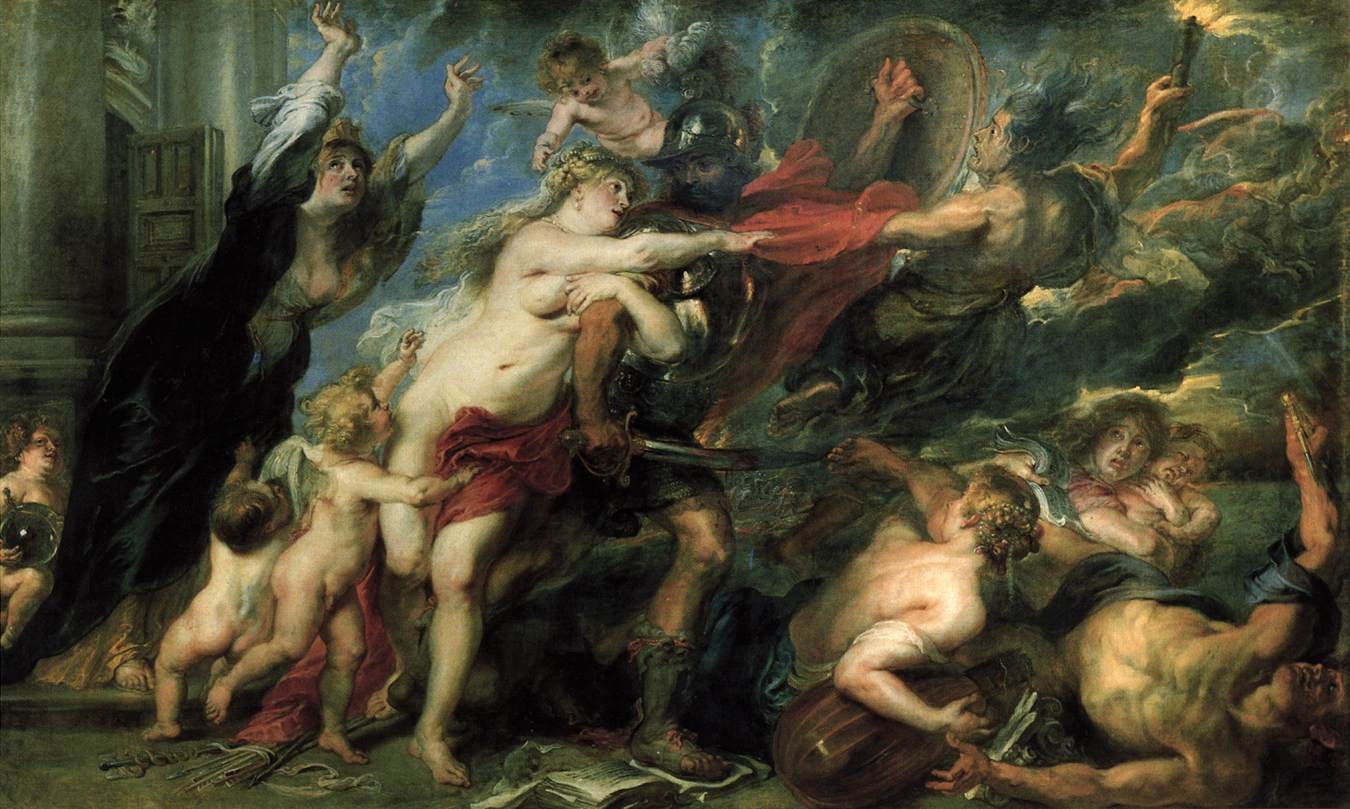
Consequences of War / Rubens 1638-39
Woke ideology is distinct from traditional leftist thought. While both prioritize humanism, liberalism, and collective responsibility, "woke" thought is unique in directing its criticism almost exclusively inward. In this framework, criticizing a different culture or religion is often seen as a moral failure. To be woke is to be hyper-aware of the wrongdoings of one’s own side, leading to a refusal to judge others for faults that one’s own culture has also committed. This is the guiding principle of the woke belief system, and its origin is found in the teachings of Jesus Christ: “First take the log out of your own eye, and then you will see clearly to take the speck out of your neighbor’s eye” (Matthew 7:1–5).
People need not be consciously aware of this theological root for it to influence them. These ideas resonate within the collective unconscious, spreading through our cultural fabric even without our explicit knowledge.
Jesus also taught his followers to "love your enemy" and "turn the other cheek"—tenets that, when followed to their logical end, lead toward absolute pacifism and the modern woke ethos. Thus, when we criticize woke ideology, we are often, in fact, criticizing the fundamental moral architecture of our own religious heritage. These morals are held more firmly than any logical argument or empirical data because they are rooted in feeling—a substance entirely different from cold reason.
Yet, if we examine these ideas critically, we see that these morals emerged at a specific moment in human history. They were a necessary corrective, designed to soften a society characterized by self-righteousness and cruelty. Jesus sought to raise human consciousness so that individuals would stop projecting their shadows onto others and start reflecting on themselves. These values are commendable and form the very foundations of Western civilization.
The underlying theory of "turning the other cheek" is psychological: by refusing to engage in conflict, the victim demonstrates that the perpetrator’s "slap" has failed to degrade them. Ideally, this causes the perpetrator to feel a sense of shame. But what happens if the perpetrator is incapable of shame? In that case, the act of turning the other cheek fails its intended purpose. Instead of awakening the aggressor's conscience, it simply opens the door for further harm.
Following these morals out of rigid dogma, rather than context, leads to unnecessary suffering. To avoid this trap, we must be context-sensitive, evaluating every situation based on its unique circumstances. To find this balance, we can look to the wisdom of ancient mythology.
Ancient Greek mythology depicts a constant, creative tension between two polar opposites: Ares, the god of War, and Aphrodite, the goddess of Love and Beauty. These are not merely stories, but archetypes—metaphysical powers connected to our deepest instincts. As Ecclesiastes 3:1 reminds us, there is "a time for every purpose under heaven." Both archetypes possess their own legitimacy—even Ares.
Throughout history, war was often waged within certain rules of honor. When these codes of honor break down, we are left with the "shadow" of war: terror. Even if a "woke" person does not engage in terror themselves, they may inadvertently sympathize with it by refusing to judge it, thereby promoting it unintentionally. When this happens, a high moral standard intended for good ends up facilitating evil. This creates a cognitive dissonance that is psychologically exhausting to maintain.
To resolve this, I follow Carl Jung’s advice: "hold the tension of the opposites." We must acknowledge both Ares and Aphrodite, recognizing that the Ego is—for better or worse—stuck between them. To live a harmonious life, the Ego must act as a negotiator between these two forces, finding a proper function for each.
Ultimately, this means that while we must strive to avoid unjustified violence against ourselves and others, we must also recognize that there are times when we must engage in justified violence to protect the values we hold dear.